Showing posts with label General Business. Show all posts

Monday, July 27, 2026

Lesson #383: Leadership Lessons From Dusty May's Championship at Michigan

Posted By: George Deeb - 7/27/2026

I have been a lifelong University of Michigan basketball fan.   When I was a student there, they had won the national championship in 1989, ...


I have been a lifelong University of Michigan basketball fan.  When I was a student there, they had won the national championship in 1989, where I had a front row seat as a member of the basketball band to see Rumeal Robinson’s hit his game winning free throws to beat Seton Hall.  But since then, it had been 37 years without a national title, and the passionate U-M fan base was aching for another championship.  U-M had gotten close a couple times, in 1992 and 1993 with the Fab Five, and again in 2013 and 2018 with John Beilein’s gutsy teams, but we just couldn’t summit the mountain.  That was until Dusty May was hired in 2024, after U-M’s worst season in their history, finishing with a dismal 8-24 record.  His two-year turnaround to a 37-3 national champion will go down as one of coaching’s greatest accomplishments.  This post will highlight a few of his leadership lessons that you can apply to your businesses.

Who is Dusty May?

The 49-year-old coach’s history with college basketball went all the way back to 1996, when he was a 19-year-old student manager for the legendary Bob Knight and the Indiana Hoosiers. He worked his way up through the coaching ranks from Eastern Michigan to Murray State, UAB, Louisiana Tech and Florida, before getting his first head coaching gig at FAU, where he lead the Owls to an unexpected Final Four in 2023 as a significant underdog.  Dusty May was officially the hot up-and-coming coach, and Michigan wasted no time in hiring him in 2024 to replace Juwan Howard.

Why He Was So Successful?

There were several reasons Dusty May was so successful as a coach.  First of all, he was a wicked smart student of the game, understanding how to put high level schemes, game plans and side-line coaching adjustments in place.  Second, he knew how to assemble unlikely rosters of under-appreciated players that he saw promise in through the transfer portal, and get them to succeed and gel in a short period of time.  Third, he got his players to believe in a “Team Before Self” mentality, which is hard to do with a bunch of elite basketball players that had previously thrived in the individual limelight at their previous schools.  And lastly, his calm/consistent demeanor, and treating his players as “family”, endeared him to his players.  Let’s dive into each of these traits at a deeper level.

Crafting The Right Strategy Matters

Dusty knew that competing in the Big Ten against some of the best teams in college basketball (sending 5 teams to the Elite Eight) required him to have a better strategy to win.  And in crafting the best strategy, Dusty was a pro and breaking down the film on his competitors, finding their weaknesses and leaning into those to create his advantages.  That allowed his team not only to win, but to win big by an average margin of 18 points during his championship season (and by an average of 22 points during the NCAA Tournament when it mattered most).  Michigan finished their regular season with a record of 19-1 during Big Ten play, a record four-game advantage over the second place teams with a 15-5 record.  And they didn’t lose a single game on their opponent’s court, which is so hard to do with home court advantages.   How well thought-out are your business strategies and how well researched are you on your competitors?

Get The Right Players That Fit Your Desired Strategy

You don’t normally see a basketball team with more than one 7 footer on the roster.  But Dusty’s rosters typically have multiple big men on the floor at the same time.  And these “giants” were not only great at rebounding, blocking shots and scoring inside, most of them are also good when shooting from three-point range.  His centers were basically playing like guards, flying around the court with an ease not typically associated with big men.  Dusty knew that basketball is a game of inches, and those extra inches in height and wing span, would matter come tournament time.  Do you have the best, most-versatile team members filling your employee rosters to give your business that extra “inside edge”?

But it just wasn’t setting the right strategy of using a lot of versatile big men, it was also picking who those exact big men were.  His transfer players like Vlad Goldin, Danny Wolf, Morez Johnson and Aday Mara were good players on their previous teams, but not all-star great players.  He saw “diamonds in the rough” that he believed he could coach up into all-star players, and sure enough Goldin and Wolf were drafted into the NBA last year, and Johnson and Mara were drafted to the NBA this year.  And players that were criticized for underperforming, like Elliot Cadeau at UNC, were now most valuable players of the NCAA Tournament under Dusty May’s tutelage.  How good are you at developing your employees and turning them into all-stars for your business?

Put the Team First, Before the Individual

Yaxel Lendeborg, the Big Ten Player of the Year and consensus First Team All-American, only averaged 15 points a game this season.  He could have easily been like any of his fellow All-American’s averaging 20-25 points per game.  But Dusty May emphasized to his players, that the team results were more important than any individual statistics.  That extra pass to an open team mate, may hurt your personal scoring stats, but it could help seal a victory.  And all this team cared about was winning in a self-less way, which is why 8 different players lead the team in scoring this year.  Opponents never could predict which one of them would be the star of the night, which was really hard to defend against.  That was a very special group of players that listened to their coaches and led Michigan and became their most-accomplished team in history. What are you doing in your organization to promote team work and getting the staff to act as one unified group committed to winning?

Calm and Steady Wins the Race

When you would see Dusty May on the sideline, you would never even think he was coaching in the middle of a game.  The expression on his faced was calm and collected.  He never let himself get wrapped up in the high and low emotions of the game.  It was all business following his proven playbook.  And his players followed suit; they appreciated his style of leadership and they knew the “ship” was in good hands with Dusty at the helm.  And they applied that same calm approach in their style of play.  They just knew every team member had each other’s back and they would figure out how to win, regardless of the opponent they were playing.  And the bigger the stage, the better they performed, often blowing out some of the best teams in the country.  How do you think your staff is responding to your vision and leadership style?

Closing Thoughts

Dusty May knew what the goal was from day one of this season—win a national championship or bust with the talent he had around the table.  He instilled an “April Habits” mindset from day one of the pre-season practices, knowing that the work they put into over the course of the year would propel them to championship heights in the Final Four in April.  He was even seen on the sideline of the first Final Four game between Connecticut and Illinois, scouting those two teams, when you would have guessed he would have been in the locker room with his team getting ready for their big game which would follow.  But when a reporter asked him about him not being with the team, he calmly responded, “nothing I would tell them in the next hour would change the result of the game—the results of tonight’s game would be decided months earlier in the work they put in leading up to tonight.”  He knew they were prepared, he knew they would win in the Final Four and he was getting a step ahead to ensure they would win on championship night.   I hope you are all putting in that same level of work and discipline in your businesses.

Now, if you can figure out how to get Dusty May back to Michigan after the Dallas Mavericks stole him as head coach last month, that would be great!  Hopefully, the new U-M head coach, Mike Boynton, a Dusty May assistant, continues in Dusty’s winning ways. Go Blue!


For future posts, please follow me on Twitter at: @georgedeeb.


Saturday, April 11, 2026

Lesson #380: What Happens To Your Business If You Die? Legacy Planning is Critical.

Posted By: George Deeb - 4/11/2026

I was recently engaged by the estate of a founder to assist in finding a new owner for their business after the founder died.   There were a...


I was recently engaged by the estate of a founder to assist in finding a new owner for their business after the founder died.  There were a lot of valuable business lessons that came out of this process that I wanted to share with you.  Not for your estate survivors after you die, but instead for you before you die, so you don’t repeat the same mistakes of this other entrepreneur that failed to properly lay out a clear legacy plan in the event of his death, leaving the survivors scrambling looking for answers in the wake of his death.

The Business and Situation

The business here was a solo-owner charitable foundation that runs a big annual event, an event that was run by the founder for decades.  The founder died with no clear plan for what do with his business in the event of his death, especially with nobody in his family wanting to pick up the reins.  But everyone associated with the event wanted the event to survive for years to come, especially to honor the legacy of the founder.  The problem was we couldn’t get into the head of the founder to ask him who he would have liked to take over for him.  Instead, we had to come up with candidates on our own.  And that left a big void for us to fill.

Step One:  Search for Breadcrumbs Left by the Founder to Help Guide Us

The founder had considered putting a transition plan in place in the past, and we were fortunate to find a few files in his office that referenced those specific partners.  He even went so far as having detailed merger discussions with two of them, the notes and draft agreement left behind in the files.  But how do we interpret that?  Yes, they are good candidates because the founder thought they were good candidates in the past?  Or, no, they are not good candidates because they never got to the finish line for some unknown reason?  We decided to pursue them, to see if there was any interest in rekindling those old discussions.

Step Two:  Speak to the Staff and Current Board of the Business For Their Thoughts

The surviving staff had been associated with this business for years and did offer up several specific suggestions of potential companies to reach out to, to take over the event.  But the staff were more execution-level in their approach and thinking, and I was looking for more of a strategic-level list of companies where the missions of the two businesses were perfectly in alignment with each other, to increase the odds of long-term survival of the event.

The board was also helpful, in that they presented themselves as a candidate to take over the event, given their decades of history there.  But that presented a couple problems.  Their recommendation was biased for their own personal interests, and it is one thing to be a board advisor, and another thing to be the actual event operator, and they didn’t really have those needed operational, marketing and fundraising skills.  There was also the issue of the event having struggled for the last couple years to grow its audience back to historical heights, and the fear of handing the event off to the same team that oversaw such historical declines.

Worth adding, I was curious why only some of the board members reached out to me to express their views, and I hadn’t heard from the others.  So, I called a few of them to seek their input, figuring they did not have a “horse in the race” and would give me a candid opinion.  Those were very telling conversations; the board members were not in alignment with each other, with one half of the board not really desiring the other half of the board to take over, to keep their going forward involvement.  I wasn’t expecting that, but it certainly helped directionally find a partner that would be embraced by most all.  And in this case, it wouldn’t be the fractured existing board. 

Step Three:  Figure Out Your Exact Needs and Outreach to New Partners That Fill Those Needs

We came up with a scorecard of everything we wanted to find in a new partner. Things like strategic fit, financial resources, event production experience, event marketing experience, reputation, interest in preserving the legacy of the founder, personality fit, vision, etc.  Strategic fit was the most important and we came up with a short list of organizations that served this same target market and reached out to each of them, interviewing each of the interested parties for the criteria above, and ultimately selecting a winner that “checked all the boxes” to move forward with the transition.

Step Four:  Prepare for a Lot of Bruised Feelings

In this project, we had five interested parties, but only one could win.  And one of those parties, the current board, felt they were “entitled” to win this event given their decades of history with it.  But it was clear for many reasons they lacked the needed skills to be successful in not only running the historical event, but growing it into something bigger and better than it had ever been in the past, to truly honor the founder’s legacy.  When many of these board members learned they did not win this process, the decided to entirely disengage with the event.  Which is really sad.  As that meant it really wasn’t about the event, or the cause, or the founder’s legacy that was important to them; it was simply their personal ambitions which was driving them.  That confirmed we made the right decision.

The other issue to navigate through was all the various surviving family members had differing opinions of how the process should be run and who should ultimately win the event.  And there was no way to make everyone happy, which bruised a lot of feelings that their opinions were not being listened to.  But without the founder making his intentions clear, and “lots of cooks in the kitchen” in the wake of his death, the project was ripe to leave people feeling discontent.

Step Five:  Hug All Legacy Partners and Make Them Still Feel Loved to Embrace the New Partner

In addition to making room for all the old board members to stay engaged in leadership roles with the new event owner, there were lots of event sponsors, vendors and other partners that needed to be communicated with and embraced to keep them involved in the future.  In this case, the event was so tied to the founder, that there was a risk of many of the historical partners not continuing their involvement going forward.  But with the right communication strategy, vision and outreach plan, we were successful in getting most historical partners to continue their involvement with the new ownership.  But in the absence of the founder giving clear direction here, to ensure his legacy desires were communicated to all ahead of the time of his death, I think we did a good job of filling that void.

The Moral of the Story

The survivors of the founder should have never been in this situation in the first place, having to “guess” what the founder would have preferred to happen to his business in the event of his death.  It is very important you document your desired transition plan for your business somewhere.  It would have been so much easier for the survivors to simply shut down the business and move on with the rest of their lives.  But in honor of the founder’s legacy, they put in the work to make a smooth transition happen. Hopefully, the founder is happy with the selected outcome, but I guess we will never know for sure.  Don’t put your own survivors in this same situation when you die.


For future posts, follow me on Twitter at: @georgedeeb.


Tuesday, February 24, 2026

[VIDEO] Is Entrepreneurship Learned or Wired Into Your DNA?

Posted By: George Deeb - 2/24/2026

I was recently interviewed by  ASBN , an online "television network" serving the small business community, about whether entrepren...


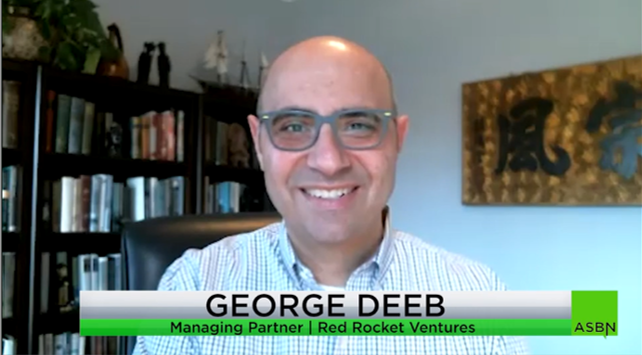
I was recently interviewed by ASBN, an online "television network" serving the small business community, about whether entrepreneurship can be learned or if it is wired into a person's DNA.  This video will help you learn the 7 skillsets needed to be a successful entrepreneur, and whether they fall into the learned or DNA category.  I thought this video turned out great, and I wanted to share it with all of you to see if you have what it takes to be a successful entrepreneur. I hope you like it!!


The embedded video player didn't give me the option to change the size of this video.  But, if you want to see a bigger version, simply click the expand size button in the player above.

Thanks again to Jim Fitzpatrick and the ASBN team for having me on the show.  I look forward to our next interview together.


For future posts, please follow me on Twitter at: @georgedeeb.


Thursday, October 9, 2025

You Sold Your Business--What Happens Next?

Posted By: George Deeb - 10/09/2025

Congratulations, you just sold your business! But don’t expect things to remain the same under the new ownership. Oftentimes, new owners hav...


Congratulations, you just sold your business! But don’t expect things to remain the same under the new ownership. Oftentimes, new owners have a different vision of what to do with your business to help achieve their needs, and they may have different ideas on how best to do certain things inside the organization, resulting in a ripple effect of chaos for the transitioning staff in its wake. This article will help you figure out what to expect after a change in control, so the expectations of you and your team are properly managed ahead of time.

Read the rest of this post in Entrepreneur, which I guest authored this week.


For future posts, please follow me on Twitter at: @georgedeeb.


Monday, August 11, 2025

[VIDEO] The Four Pillars of Equity Distribution For Startups

Posted By: George Deeb - 8/11/2025

I was recently interviewed by  ASBN , an online "television network" serving the small business community, about how best to split...


I was recently interviewed by ASBN, an online "television network" serving the small business community, about how best to split-up the equity between cofounders of a startup.  This video will help you learn how to handle all the key drivers here, like if the cofounder is investing cash, if they are deferring salary, their role in the company and more.  I thought this video turned out great, and I wanted to share it with all of you to make sure all cofounders are being treated fairly upfront, so there are no debates about equity interests in the future. I hope you like it!!


The embedded video player didn't give me the option to change the size of this video.  But, if you want to see a bigger version, simply click the expand size button in the player above.

Thanks again to Jim Fitzpatrick, Shyann Malone and the ASBN team for having me on the show.  I look forward to our next interview together.


For future posts, please follow me on Twitter at: @georgedeeb.


Thursday, May 29, 2025

Lesson #372: Stop Aiming for Perfection--As Time Kills All Deals!

Posted By: George Deeb - 5/29/2025

Winston Churchill is famously known for saying “perfection is the enemy of progress”.  And that quote most relevantly applies in business, p...


Winston Churchill is famously known for saying “perfection is the enemy of progress”.  And that quote most relevantly applies in business, perhaps more than any other sector.  You may say, why is perfection a problem?  Isn’t perfection a noble goal when doing your work?  The answer is: perfection takes time, and time in the business world can often be a deal killer.  If you can produce A- work in one week and A+ work in one month, that incremental benefit of the “perfect” work product, is most certainly lost in the form of the three weeks of lost time.  When an A- is good enough to get the job done, take the win, and move on.  This post will teach you how to better keep your business running at “light speed”. 

Examples of How Perfection Can Get in The Way of Progress

There are many examples in the business world where perfection can be your enemy.  Let’s talk through a few examples.  Firstly, in your sales efforts, a client waiting an extra three weeks for your proposal, is mostly like still shopping with your competitors. Close the sale faster, to ensure that client ends up with you and not your competitor.  Secondly, when disposing of owned assets, like real estate, most often times your first offer is your most seriously interested buyer with the highest odds of getting to closing.  Don’t hold out for an even better offer that most likely will never materialize, and risk losing the “bird in hand”.  Thirdly, let’s say you are negotiating the sale of your company, don’t dig in, holding out for certain points in your contract or a certain valuation in mind.  Making a three-month sale process turn into a six month sale process will negatively wear upon the other party, potentially having them walk from the deal after the excitement of buying the company has worn off.  The examples are limitless here, but hopefully you get a better picture of how perfection can hurt you.

An M&A Case Study on How Time Can Be Your Enemy

One of my clients was recently trying to sell their business.  They started the process in February 2024 and were hoping to be done six months later in August 2024.  At every step of the process, the business owner was “over engineering” everything.  Instead of picking a business broker and attorney in a few days, he ran an exhaustive process of interviewing many prospective brokers and attorneys over several weeks, looking for the best one.  Additionally, instead of turning the sale book around in one or two rounds of comments, he required over ten rounds of comments, trying to tell the perfect story.  Furthermore, instead of having the business broker quickly start making calls to the first 200 prospective buyers on their list, this same individual kept pushing the broker for more and more names to be added to the calling list, slowing down the process as the broker needed to shift focus from starting calls to expanding the list to the requested 1,000 prospective buyers (requiring 5x as much work).  Finally, during negotiations, instead of one or two turns of the purchase agreement, he kept digging in on few deal points with over five turns of the documents, seeking “the perfect deal”.

Collectively these actions materially slowed down the process.  Then guess what happened?  Instead of being closed by the original August 2024 target date, they were still in discussions with buyers in November 2024 (three months behind plan).  And remember what happened that month? A new president was elected, one talking about his big plans to launch new tariffs on the countries where this company sourced much of its products.  All of sudden a cloud was hanging over this business and the industry, and it spooked the originally excited buyers to the point they all stopped their conversations and there were no more interested parties to sell to.  Those three lost months ended up causing the owners of the business near certainty a deal would have been closed in August 2024 and lost them millions of dollars in sale proceeds in the process. What a mess!

Know Your Goals—Knock Down Walls

You need to keep yourself accountable on what the most important goals are and manage towards those goals.  In the above case study, the primary goal was:  get the business sold in the next six months to lock in the high return on investment the owners were seeking.  Nowhere in that goal does it say have the perfect broker, perfect lawyer, perfect sale book, perfect valuation, perfect contract, etc.  Seeking perfection at every step along the way was in direct conflict to the primary goal, and now the company is paying a big price, to the point it may never be able to sell its business in the current economic climate.

Keep Your Business Running at Light Speed

At the end of the day, when setting your priorities and managing your workload, always subscribe to the K.I.S.S. method (Keep It Simple Stupid).  Anything that overcomplicates things will make what should have been a fast and easy process, a torturous nightmare wearing down everyone that is involved in that project, from your own employees to whoever you are trying to do business with.  And when people get demotivated or tired, the easiest path those people have to make the pain stop, could end up having them walk in another direction, leaving you with a revolving door of talent and nobody wanting to work with you.  Don’t be that person, as life is too short and your business will suffer if you do.  

How do you know if this is you, and how do you manage yourself and keep yourself accountable?  I typically live by these two rules: (1) hit your preset timeline (if you are behind plan, don’t let the due date slip, you have to move faster); and (2) make no more than three changes to the same work product (if you can’t get it “close enough” after three tries you are not being effective as a communicator or you are not effectively listening to the needs of others in creating a win-win outcome for both parties).  So, anything that slows you down needs to end—move on with “good” without always seeking “great”.  Your team will thank you and your business will increase its odds of success in whatever it is trying to accomplish.

Closing Thoughts

If any of the above sounds like it could be happening in your business—by you, by your team, by other parties—the offending parties need to take a long look in the mirror and figure out how to get moving faster.  But my guess is, the offending party (which could be you), may not know they are the offending party, which is even worse.  So if you are getting feedback from your team that you are getting in the way of speed and progress—it is time to reverse course and get out of their way (that is not a time to dig-in to get your way towards perfection).  Frankly, more successful businesses are lead by the person that is perfectly happy with “breaking things” and “imperfection”, as good things typically come out of that process and quicker timeline.


For future posts, please follow me on Twitter at: @georgedeeb.


Saturday, March 15, 2025

Perfection Requires Time--And Time Kills All Deals! Stop Trying to Be Perfect!

Posted By: George Deeb - 3/15/2025

 Winston Churchill is famously known for saying, "Perfection is the enemy of progress." And that quote most relevantly applies in ...


 Winston Churchill is famously known for saying, "Perfection is the enemy of progress." And that quote most relevantly applies in business, perhaps more than any other sector. You may say, why is perfection a problem? Isn't perfection a noble goal when doing your work?  The answer is that perfection takes time, and time in the business world can often be a deal killer. If you can produce A- work in one week and A+ work in one month, that incremental benefit of the "perfect" work product, is most certainly lost in the form of the three weeks of lost time. When an A- is good enough to get the job done, take the win and move on. Here is how to better keep your business running at "light speed."

Read the rest of this post in Entrepreneur, which I guest authored this week.

For future posts, please follow me on Twitter at: @georgedeeb.


Wednesday, January 29, 2025

Lesson #368: Pending Tariffs Creating Paralysis for Businesses

Posted By: George Deeb - 1/29/2025

  When businesses are unclear on what the future will bring, it often results in a “wait and see” approach before making any material invest...


When businesses are unclear on what the future will bring, it often results in a “wait and see” approach before making any material investments.  We see that leading into most presidential elections, as different presidential winners could have different impacts on the economy based on their promoted policies.  The winner of the most recent election is touting his plan to levy up to 25% tariffs on China,  and potentially other countries where he sees an imbalance on trade levels.  The result of that has most business executives very worried about the future impact of any tariffs on their businesses, and hence has “paralyzed” many companies, resulting in them pushing off any material investments until the situation becomes more clear.  This post will better educate you on why business executives are worried, and what this may mean for your businesses.

Why Tariffs are Generally Bad for the Economy

Tariffs are not penalties paid by the country they are being imposed upon.  Instead they result in a 25% increase in the cost of those products which are imported from those countries.  And guess what, when the costs of importing goes up, the importing companies in the U.S. typically raise their prices to cover the higher costs of those products. And if the U.S. importers raise their prices, it is ultimately the U.S. consumer (you and me) that end up paying higher prices at the retail stores where we purchase these products.  Rising costs for consumer goods will decrease consumption, hurting the sales and profits of those products, which in turn lowers the success of the U.S. based importers, hurting their ability to re-invest in their businesses (creating new jobs), and in turn hurting the U.S. economy.  It is a vicious cycle.

To try and scope the size of the potential impact, here are a few stats.  Imports represent around 14% of the U.S. GDP and around 17% of total imports come from China.  That in itself does not sound too bad, but U.S. GDP includes a lot of huge industries like oil and food that are not sourced from China.  When you study consumer spending behavior on the goods they are most often purchasing, things like apparel, shoes, toys, electronics and textiles, around 40% of those products are coming from China.  If consumers see a 25% increase on 40% of their spending, that will result in a 10% immediate impact to their spending power, further straining their ability to effectively make ends meet.  As consumers will be spending the same 100% budgets they have to spend, it will only go 90% as far, forcing them to make difficult decisions on which products are kept in their monthly budgets and which products are cut.  The manufacturers or importers of the “cut products”, will see an immediate impact on their revenues and profits, hurting their businesses, their ability to create new jobs and the economy overall.

A Case Study

This is not the first time the Trump administration has imposed tariffs on China.  He imposed 10% tariffs on Chinese sourced products during his first administration (2016-2020).  We saw the impact of this on the restaurant furniture industry.  The retail cost of these products ultimately increased 10%, and the U.S. importers went looking for other sources of product (e.g., Vietnam), in an effort to try and get their prices back down.   Our business was fortunate enough to pass through a 10% price increase to our B2B customers, without a material impact on our demand or profit margins.  

But a 25% price increase would create much bigger headaches.  First of all, customers may be unwilling to pay 25% more for those products (which could impact margins and profits), or they may push off any discretionary spending entirely (hurting revenues and demand).  But in the restaurant industry, there will be a greater worry:  if consumers are seeing 25% higher prices on their everyday purchases like apparel, shoes and textiles, they will feel a squeeze on their personal checkbooks, which is turn may have them spending less on discretionary purchases like going out to dinner at restaurants, which in turn will have the restaurants seeing less sales and profits, and a general inability for them to reinvest in their businesses in the form of new locations (creating new jobs) or upgrading their old locations.  So, let’s hope that doesn’t actually happen.

What This Means for 2025

I think there is generally going to be a “wait and see” approach this year before companies make any material investments (creating new jobs), which in turn will stagnate the economy until the business executives feel more confident they have their arms around the situation.  Trump took office in late January, and tariffs on China may not be known until the end of his first 100 days in office.  Which means It could be the end of April before business executives have a clearer understanding of what actions were taken by the Trump administration and what the estimated impact of those tariffs on their businesses could be.

Then, one of two things could happen.  One, the news is not as bad as they thought, and they get back to growing their businesses normally, per their original plans.  Or two, they react negatively to the news, and they start to “batten down the hatches”.  That could result in a decrease in spending, a decrease in investments (job growth creation), or worse, they don’t have enough cash on hand to weather the storm, and they start laying people off to lower their expenses.  Once people start losing their jobs, that would negatively impact consumer spending, and in turn, further hurt the U.S. economy.  I am sure rooting for path number one over path number two.

Closing Thoughts

Many of us are already seeing a general softness in our businesses, largely due to our customers employing this “wait and see” approach.  Material purchases are getting “back-burnered” until business executives can get more clarity on the tariff situation.  That includes both for their normal day-to-day purchases (e.g., new store growth, major remodels, big capital expenditures), and for things that can materially move their businesses forward, like mergers and acquisitions.  Business buyers are more nervous right now and banks which fund these deals are being more cautious than ever in their lending decisions, making it harder for business buyers to access the needed capital. 

So, if I were the man sitting at the Resolute Desk in the Oval Office, I would think long and hard before implementing tariffs.  Yes, it may sound like you are punishing China and that could get you some short term sound bites with your voting base or generate additional revenues for the government.   But, if you put on your long-term glasses, you could end up putting the U.S. economy into a tail spin (which we are already seeing nervousness in the U.S. stock market).  Proceed with caution, both at the government level and in your own business forecasts!!   


For future posts, please follow me on Twitter at: @georgedeeb.


Why Pending Tariff Uncertainty is Creating 'Wait and See' Approach

Posted By: George Deeb - 1/29/2025

When businesses are unclear about the future, they often take a "wait and see" approach before making any material investments. Th...


When businesses are unclear about the future, they often take a "wait and see" approach before making any material investments. This is especially true in most presidential elections, as different presidential winners could have different impacts on the economy based on their promoted policies.  The winner of the most recent election is touting his plan to levy up to 25% tariffs on China and potentially other countries where he sees an imbalance in trade levels. The result has most business executives very worried about the future impact of any tariffs on their businesses and, hence, has "paralyzed" many companies, resulting in them pushing off any material investments until the situation becomes clearer. This post will better educate you on why business executives are worried and what this may mean for your businesses.

Read the rest of this post in Entrepreneur, which I guest authored this week.

For future posts, please follow me on Twitter at: @georgedeeb.


Thursday, September 5, 2024

Lesson #363: Trying To Scale Your Startup? The Odds Are Not In Your Favor!

Posted By: George Deeb - 9/05/2024

  My colleague and serial entrepreneur, Scot Wingo , of ChannelAdvisor, Spiffy and Triangle Tweener Fund fame, recently posted on LinkedIn, ...


My colleague and serial entrepreneur, Scot Wingo, of ChannelAdvisor, Spiffy and Triangle Tweener Fund fame, recently posted on LinkedIn, how hard it was to scale a business. He referenced data from a book by Verne Harnish, the founder of Entrepreneur’s Organization, called Scaling Up: How a Few Companies Make It . . . and Why the Rest Don’t

The core of the story was this graphic:


What the graphic basically says is, of the 28,000,000 businesses in the United States, only 0.061% actually get larger than $50MM in revenues. And 96% of all businesses, never get larger than $1MM in revenues. I was so taken back by the data here, that I thought it was worthy of a deeper discussion.

Why is It So Hard to Scale?

Very Few Best Educated Entrepreneurs. The US News & World Report only lists 39 universities as being the best undergraduate entrepreneurship programs. Let’s estimate that the average class size at those business schools is 1,000 per school and that 10% major in entrepreneurship (or 100 per school). So, there are 3,900 highly regarded entrepreneurship graduates per year. With an average career length of 44 years (from 21 to 65 years old), that means there is a pool of 171,600 people best trained in entrepreneurship. There are 333.3MM people in the United States, and 28.94% of them are “working age”, creating a pool of 96.5MM workers. That means only 0.18% of workers properly knew what they were signing up for in the world of entrepreneurship, before diving in headfirst. Now, all of a sudden, the numbers in the chart don’t look that far off of what should have been reasonably expected.

Worth mentioning, notice I focused on entrepreneurship majors. I intentionally ignored business majors. Most business degrees are pumping out graduates that work in large companies. And the skillsets needed for running a Fortune 1000 sized company are materially different than the skillsets needed for taking a piece of paper idea and turning it into a successful business.

You Don’t Do Your Homework Before Launching. For many businesses that launch, they do so without building a proper business plan, including doing homework on their industry and competition, identifying affordable sales and marketing opportunities, and ensuring there is a good product market fit. Would you take a test in school, without first doing your homework, or studying for the exam? Of course you wouldn’t. So don’t do it when launching a business, especially given the large amount of dollars you will be putting at risk, potentially getting flushed down the toilet with the low odds of success being talked about in this article.

You Don’t Have the Right Skills Needed. You have to be honest with yourself. Are you the right person to actually launch this business and execute the business plan? Do you have the right skillsets required for strategy, management and fund raising? You most likely don’t. So that means you need to hire the people with the right skills or surround yourself by mentors and advisors that have “been there, and done that” before, to help get you up the learning curve. There is very little room for making mistakes in the world of startups, given the capital requirements.

You Don’t Evolve As the Business Needs Change With Scale. The graphic above illustrates four “valleys of death”. These are the points where most businesses “stall out” in their growth curves. Why is that? Go back to the last paragraph; they don’t have the right skills needed for that next phase of the company’s growth. The skills it takes to grow from $1MM to $10MM in revenues are completely different than the skillsets needed to grow from $10MM to $50MM. The bigger you get, the more complexities there are. Bigger companies have to start thinking about things like international expansion and mergers & acquisitions, which were never given a thought for the smaller business. So, as you scale, you really need to re-assess your senior management needs to make sure that new team, has also “been there, and done that” for the skillsets needed for the next phase of your growth. They are materially different.

They Run Out of Money. Some startups run out of money for things out of their control, like a crash in the economy or the financial markets. And other startups run out of money, simply because they under-budgeted for what their entire needs would be, or they were too aggressive with their revenue growth assumptions. Oftentimes, by the time they realize they are out of cash, it is too late to raise new capital, as a fundraising process can often take up to six months. So plan far ahead and keep your eyes firmly glued to your “gas tank”.

When The Going Gets Tough, The Weak Throw in the Towel. Startups are full of disappointments and let downs. You may need to listen to 100 people say “no” before you find that one person that is willing to say “yes”. Not everyone has the “fire in the belly” needed to break down those walls and push the company on to future success in the face of all these headwinds. So, if you don’t like the idea of feeling like you are constantly “pushing water uphill”, you probably shouldn’t consider a career in entrepreneurship. It is not a career for the weak of heart.

Why Do Venture Investors Take This Level of Risk?

With this low level of success in scaling businesses, why do venture capitalists even invest at this stage?

First of all, professional venture capitalists are exactly that . . . professionals! They have done this for a living for decades and have listened to thousands of entrepreneurs pitch their businesses and know what it takes to succeed. So, for many of them, they are confident in their own experiences from their past portfolio companies to “defy the odds”.

Secondly, they employ a portfolio strategy: out of any one fund they make 25-30 investments. They know 90% of them will break even or lose money. But they also know the 2-3 that breakthrough will generate a large enough return to generate an impressive return for the entire fund. For example, if they make 20x return on 10% of the portfolio, and break even on the rest, the fund still yields a 25-30% annual return to their investors over a five-year period. Point here: diversification is key, don’t put all your eggs in one basket.

Lastly, the best venture capitalists know how to game the system. Let’s say they are investing in marketing software companies. The good ones have relationships with CMOs at many companies, that can help them do due diligence on the merits of the startup’s idea and become initial customers for that startup (which is the hardest part of scaling—finding customers). What will be your “unfair advantage”?

Should You as an Entrepreneur Take on This Level of Risk

After reading this article, do you think you have what it takes to be one of the 0.061% that can break through to over $50MM in revenue, which is what investors will be listening for? Do you have a good, well-researched idea? Do you have the right team in place? Do you have the capital lined up to succeed, in both good times and in bad, with enough cushion in place for the unexpected hiccups, for which there will be many? Are you prepared to hand over the CEO reins for the next chapter of your growth? Do you have the intestinal fortitude to plow through all the roadblocks? Do you have an “unfair advantage”, that will help you with customer acquisition? If so, maybe we will be singing your praises in the years to come. But there are very high odds, based on the data above, that we will not. So, be honest with yourself before rolling the dice and putting your life savings at risk. Especially, since you won’t have the luxury of a portfolio strategy, like a venture capitalist has, with all your eggs in one basket. Batten down the hatches, it should be wild ride. Prepare for the worst, and hope for the best.


For future posts, please follow me on Twitter at: @georgedeeb.


Friday, June 7, 2024

Trying to Scale Your Startup? The Odds Are Not in Your Favor!

Posted By: George Deeb - 6/07/2024

My colleague and serial entrepreneur, Scot Wingo , of ChannelAdvisor, Spiffy and Triangle Tweener Fund fame, recently posted on LinkedIn, ho...


My colleague and serial entrepreneur, Scot Wingo, of ChannelAdvisor, Spiffy and Triangle Tweener Fund fame, recently posted on LinkedIn, how hard it was to scale a business.  He referenced data from a book by Verne Harnish, the founder of Entrepreneur’s Organization, called Scaling Up: How a Few Companies Make It . . . and Why the Rest Don’t.  The core of the story was this graphic:


What the graphic basically says is, of the 28,000,000 businesses in the United States, only 0.061% actually get larger than $50MM in revenues.  And 96% of all businesses, never get larger than $1MM in revenues.  I was so taken back by the data here, that I thought it was worthy of a deeper discussion.

Read the rest of this post on Entrepreneur, which I guest authored this week.

For future posts, please follow me on Twitter at: @georgedeeb@georgedeeb.


Monday, June 3, 2024

[VIDEO] A 'Fresh Set of Eyes' Can Help Turnaround Struggling Businesses

Posted By: George Deeb - 6/03/2024

I was recently interviewed by  ASBN , an online "television network" serving the small business community, about how a "fresh...


I was recently interviewed by ASBN, an online "television network" serving the small business community, about how a "fresh set of eyes", can help turn around struggling business.  As you will learn, sometimes the founders are simply too close to the business, to clearly see the "forest through the trees".  I thought this video turned out great, and I wanted to share it with all of you, to see if a fresh set of eyes can help your business.  If so, you know who to call.  I hope you like it!!


The embedded video player didn't give me the option to change the size of this video.  But, if you want to see a bigger version, simply click the expand size button in the player above.

Thanks again to Jim Fitzpatrick, Shyann Malone and the ASBN team for having me on the show.  I look forward to our next interview together.


For future posts, please follow me on Twitter at: @georgedeeb.

Thursday, April 4, 2024

[VIDEO] How to Define What is an Entrepreneur?

Posted By: George Deeb - 4/04/2024

I was recently interviewed by  ASBN , an online "television network" serving the small business community, about how to define wha...


I was recently interviewed by ASBN, an online "television network" serving the small business community, about how to define what exactly is an entrepreneur.  As you will learn, it comes down to being a leader, a visionary, a risk taker, a pitbull and a superhero.  I thought this video turned out great, and I wanted to share it with all of you, to see if you have what it takes to be a successful entrepreneur.  I hope you like it!!


The embedded video player didn't give me the option to change the size of this video.  But, if you want to see a bigger version, simply click the expand size button in the player above.

Thanks again to Jim Fitzpatrick, Shyann Malone and the ASBN team for having me on the show.  I look forward to our next interview together.


For future posts, please follow me on Twitter at: @georgedeeb.

Wednesday, March 6, 2024

Lesson #359: How to Cut Dead Weight Out of Your Business

Posted By: George Deeb - 3/06/2024

  In business, you need to be running as efficiently as possible.  But, I have seen many businesses carrying a lot of “dead weight”, which i...


In business, you need to be running as efficiently as possible.  But, I have seen many businesses carrying a lot of “dead weight”, which is holding them back.  Some of that dead weight are smaller things, like being overstaffed or spending too much for services.  Or, poorly investing their sales and marketing dollars.  And, some of that dead weight is pretty material, like operating too many divisions or focusing on channels that don’t have a material payback.  This post will help you learn how to identify the various types of dead weight, so you can assess your business and see if there is any pruning to be done.

Strategic Dead Weight

Strategic dead weight is building a strategy plan that has you focusing in areas that the business really shouldn’t be focused on, investing resources in a way that is either not driving an ROI or it has become a distraction to more profitable areas of the business.  This could be things like supporting too many brands or divisions, or too many products, or too many sales channels, collectively taking focus away from the real core competency or most profitable product line of the business.

Operating Dead Weight

Operating dead weight is basically running the business inefficiently.  That could be having a staff that is too large in relation to the true business needs, or renting an office that is larger than you truly need, or paying more for services than is truly market rate, or worse, paying for services you really aren’t using at all.  Every penny matters in early-stage businesses, and ineffectively investing your precious cash resources means you are flushing dollars down the toilet that couldn’t have been better invested in other higher ROI activities.

Sales and Marketing Dead Weight

Sales and marketing dead weight, is investing your payroll dollars into salespeople that are not driving enough sales to hit their goals (or at least cover their costs) or investing your advertising dollars into campaigns that are not driving a profitable return on ad spend (ROAS). You need to be religiously studying your sales team’s performance and your advertising team/agency’s performance to ensure they are hitting their goals.  And, not only in the aggregate, but line-by-line for each specific campaign, to optimize and prune accordingly.  You always need to be cutting your “losers” and re-investing those dollars to “double down” on your “winners”.

A Strategic Case Study

As a strategic example, when we acquired my current business, it was operating two brands, Restaurant Furniture Plus, targeting commercial buyers, and Your Bar Stool Store, targeting residential consumers.  When running two of anything, that meant double the effort.  We needed to build and maintain two different websites and two-different marketing campaigns, as an example.  When we studied the financials by brand, we learned that Your Bar Stool Store was driving around 20% of the revenues, but only 5% of the gross profits, as its average order size was only $2,000 compared to $6,000 at Restaurant Furniture Plus.  And, there were material operating inefficiencies with serving the consumer market, which often resulted in a lot more phone calls to answer and a lot more claims and returns, which created a lot of extra work.  At the end of the day, Your Bar Stool Store was break even at best.

We decided to shut down Your Bar Stool Store, the original brand of the company, to help us cut our “dead weight”.  It helped us increase our strategic focus on more profitable commercial buyers, it helped materially improve operating efficiencies, and most importantly, it helped us re-invest those marketing dollars into the higher performing commercial business to materially accelerate our revenues and profits.  The “sacred cow” of the founders was sacrificed, to help propel the “better business” to newer heights.

Closing Thoughts

Small businesses cannot afford to be carrying any dead weight. They need to be nimble for maximum speed, and laser focused on what will drive the most profits.   Any things that get in the way of that goal, need to be sacrificed for the greater good, no matter how much you like that “sacred cow”.  It may result in some short term pain, but trust me, the long term gains in focus, efficiencies and profits will quickly mend those wounds.  So, what are you waiting for?  It is time to take out your magnifying glasses and start scouring for any dead weight in your business.  And then, take out your hatchets for larger inefficiencies, or scalpels for smaller inefficiencies, and start cutting away.  Your bottom line profits will thank you!!


For future posts, please follow me on Twitter: @georgedeeb.


Thursday, February 29, 2024

[VIDEO] What Milestones Should Your Startup Track?

Posted By: George Deeb - 2/29/2024

I was recently interviewed by  ASBN , an online "television network" serving the small business community, about what key mileston...


I was recently interviewed by ASBN, an online "television network" serving the small business community, about what key milestones a startup should track as it is getting its business off the ground.  As you will learn, you can manage what you are not measuring, and these milestones will help you set the proof-points that will impress prospective investors.  I thought this video turned out great, and I wanted to share it with all of you, to make sure you are defining the key milestones and metrics for your busines.  I hope you like it!!


The embedded video player didn't give me the option to change the size of this video.  But, if you want to see a bigger version, simply click the expand size button in the player above.

Thanks again to Jim Fitzpatrick, Shyann Malone and the ASBN team for having me on the show.  I look forward to our next interview together.


For future posts, please follow me on Twitter at: @georgedeeb.

Monday, February 5, 2024

Lessons in Leadership: A Jim Harbaugh Case Study

Posted By: George Deeb - 2/05/2024

  I am a graduate of the University of Michigan and lived through the roller coaster ride of the Jim Harbaugh era in Ann Arbor, which has re...


I am a graduate of the University of Michigan and lived through the roller coaster ride of the Jim Harbaugh era in Ann Arbor, which has recently come to an end with him returning to the NFL after winning the national championship at Michigan.  But, the last nine years has provided many nuggets for entrepreneurs to learn from, in terms of how to approach leadership.  This article summarizes the best of those leadership lessons to potentially apply in your businesses.

A Quick History

Michigan football is the winningest program in college football history, with a rich tradition of excellence and a rabid fan base that expect nothing less than winning championships every year.  But, when head coach Lloyd Carr retired after the 2007 season, nobody expected it would be followed by the lackluster coaching tenures of Rich Rodriguez and Brady Hoke between 2008 and 2014.  This had Michigan fans even hungrier to restore its championship ways.  And, who better to call on to "right the ship" than Jim Harbaugh, a true "Michigan Man", a beloved Bo Schembechler disciple and former Michigan star quarterback, that had realized head coaching success everywhere he had been (e.g., San Diego, Stanford, San Francisco 49'ers).  Jim Harbaugh agreed to take the reins of Michigan football starting in the 2015 season to "save" his beloved alma mater and return Michigan to greatness.

The first five years of Harbaugh's tenure as Michigan head coach were "ho hum" based on Michigan's goals.  He won 8-10 games in each of those years.  But that meant there were 3-5 losses in those years, and the losses were usually on the biggest stage, losing to ranked teams, in bowl games or to Michigan's arch rival Ohio State.  The fans were most panicked after the 2000 season (COVID year), when the team went 2-4 and people we calling for Harbaugh's firing.  But, the athletic director stood behind Harbaugh, they restructured his contract in light of poor performance, Harbaugh retooled the program, and then magic happened.  In the following three seasons, Michigan's record was 40-3, they beat archrival Ohio State in each of those years, they won three straight Big Ten championships and capped it off in 2023 with a 15-0 season and winning the national championship on the biggest stage.  Michigan had finally returned to being an elite program, and the fan base was beyond ecstatic.  After the season, Harbaugh decided to pursue his dream of winning a Super Bowl, and returned to the NFL as head coach of the Los Angeles Chargers.

Now, here are the resulting leadership lessons that come from this story:

Your Strategy Really Matters

When Harbaugh got started, he was talked into trying more of a spread-style offense, with speed in space, which was what the better teams were employing at the time.  But, with all the big bodies of the Big Ten, they simply weren't winning the battle in the trenches on the offensive and defensive lines.  It wasn't until Harbaugh reverted back to his "tried and true", "smash mouth" style of playing football, that he truly started to excel.  That wasn't a popular strategy, with slow style of play resulting in "three yards and a cloud of dust", but it was a strategy Harbaugh knew well and succeeded with in the past.  So, he pushed in all his chips, doubled down on that strategy, and the wins started to follow.  So, like with anything, do what you know and think is best, regardless of whatever "noise" would suggest otherwise.

Your Management Team Really Matters.  

Harbaugh cycled through a bunch of assistant coaches during his tenure.  It wasn't until he tapped into the defensive schemes used in the NFL, by his brother John Harbaugh at the Baltimore Ravens, that good things started to happen for Michigan. Harbaugh hired two defensive coordinators out of the Ravens, Mike McDonald and Jesse Minter, and those guys helped to turn Michigan's defense into the #1 defense in all of college football, in multiple years.   And, that doesn't even talk about adding in world class strengh and conditioning, and nutritional coaches, as Harbaugh knew those areas were just as important to success as learning the playbook.  So, surround yourself by the best people possible.

Your Employees (Players) Really Matter--Win The Recruiting Battle

When Harbaugh got started, he did everything he could to stand out with recruits and push the envelope within the rules of the NCAA.  He would set up satellite football camps in other states that were recruiting hotbeds, with the logic if they won't come to visit Michigan, we will bring Michigan to them (which irritated the competiting football programs in those states).  He would take his team on big international team building trips (to give the players more than a football experience at Michigan).  He would have dinners and sleepovers at recruits' houses, to show those families how important that recruit was to him.  He launched a documentary about the Michigan football team on Amazon Prime, to get the program more media exposure nationwide, with an "inside look" at how business is done in Ann Arbor.  He may have gathered a lot of strange looks along the way, but there was clearly a method to his madness. Figure out what you need to do to attract the best talent, and stand out from your competitors.

Your Employees (Players) Really Matter--Recruit the Right People

Equally important was recruiting the right type of player.  Harbaugh was critcized for not recruiting enough five-star players.  But to him, it was more about the character of the person he was recruiting, knowing he would "coach up" a three or four-star player, into a "five-star" NFL prospect.  He wanted the guys that were underappreciated, had a chip on their shoulder, had a lot of hurdles they overcame.  He wanted that drive and mindset, as you can't teach that.  So, when the going gets tough, he would have a tough-minded team that would get going, driven to succeed no matter what challenges they were presented with.  And it worked, as evidenced by this year's Rose Bowl, when Michigan's 2 five-star players beat Alabama's 18 five-star players.  So, make sure your hires fit your desired culture, as you can't afford to have any "bad apples" in the bushel.

Your Team Culture Really Matters

I have watched over 40 years of Michigan football, and I have never seen a "team first" culture like this year's team.  They all had the singular goal of winning a national championship (after getting so close the previous two years), they knew they all needed to do their part on the field and in the weightroom, they all truly loved and inspired each other, and they were all "selfless".  Quarterback J.J. McCarthy sacrificied individual passing stats, if the coaches thought Michigan's vaunted running game would win the game.  Back-up running back Donovan Edwards, who could have easily started at any other school, was happy to play second string behind Blake Corum, if the coaches thought that would help them win the game.  Culture is one of the hardest things to build, and Harbaugh masterfully built his. You need to do the same.

Patience Is a Virtue

It would have been very easy for Athletic Director, Warde Manuel, to cut ties with Harbaugh after their dismal season in 2020.  But, Manuel believed in Harbaugh, and was willing to give him another chance.  It may have taken 9 seasons instead of 5 seasons to win a national championship, but Harbaugh ultimately delivered on the goal of restoring Michigan to greatness.  So, when making your hiring and firing decisions, be sure not to throw out "the baby with the bathwater".

Sometimes You Need to Eat "Humble Pie"

You have to know that Harbaugh was frustrated with his performance in 2020.  He was hired to restore the Michigan brand as one of the elites.  He wanted that more than anybody.  But, Harbaugh was willing to make the hard sacrifices.  He voluntarily cut his lofty salary in half, and made it more of a pay-for-performance structure, where the better the team did, the higher he got paid.  And, he pushed more of the team's salary budget, into the hands of his assistant coaches to increase their rewards for their hard work.  And, during COVID, even took personal monies to save certain staffers from getting fired.  That was not normal actions in the egomaniacal world of college football coaching.  But, these actions all instilled trust with the adminstration and loyalty by his team.  What can you do for your teams, to replicate this level of trust and loyalty to you?

Don't Publicly Disclose Your Actions Unless You Have To

The one big criticism of Harbaugh was his perennial flirtation with the NFL.  In 2022, it was with the Minnesota Vikings.  In 2023, it was with the Denver Broncos.  In 2024, it was with the LA Chargers who ultimately hired Harbaugh. Even if Harbaugh's intent was to create negotiating leverage for his contract renewal with the University of Michigan, you don't do it publically in the media, for all the current players, coaches and recruits to see.  It doesn't create a sense of stability, and would naturally have everyone looking for the door, especially with rival coaches fueling that messaging in their recruiting pitches.  Which is part of the reason Michigan's recruiting class ranks suffered.  So, keep your cards close to your chest any time your actions could have a negative impact on the team.

Timing Is Everything

If Harbaugh had left Michigan after his disastrous 2020 season, his reputation would have been permanently stained.  It would have been his first real failure, and his reputation with the university he loves, would have gone from beloved Michigan Man to a pariah.  But, by righting the ship, and leaving after winning the national championship, all is good with the world.  Harbaugh accomplished his goals, the fans are euphoric and he will be fondly remembered as the man that "saved" Michigan football.  And, even if he wants to go scratch that itch of coaching in the NFL and leaves Michigan, sobeit, we wish you the best.  In three short years, Harbaugh legacy evolved from "loser" to "legend".  And let's be real, there is only one way to go when you are at the top, and it was unlikely for Michigan to have another undefeated season in 2024 with top ten programs like Texas, Washington, Oregon, USC and Ohio State on the schedule, in the wake of four Pac-12 teams joining the Big Ten next season.  Timing is a critical compotent to your success and reputation, so use it wisely in your own efforts.

If It Isn't Broken, Don't Fix It

On the heels of Michigan's first national championship since 1997, losing your head football is not what an athletic director wants to deal with.  But, Manuel's actions were swift, and rightfully so.  He promoted Offensive Coordinator, Sherrone Moore, to head coach. Why?  Firstly, because Harbaugh said he was the next guy to carry the torch, and Manuel trusted Harbaugh's opinion.  But, more importantly, the players loved him, and he would maintain Michigan's very unique culture going forward, hopefully giving the team increased odds for additional championships in the future with a "winning recipe" in hand.  And, everyone remembers Moore's success filling in for a Harbaugh during his three-game suspension last season (for the sign stealing scandal), winning all three games against Michigan's three toughest opponents that year (Penn State, Maryland and Ohio State).  So, he was a known entity.  Could Michigan have hired a big name coach out of another program? Sure, it could have.  But, it would have risked toppling the entire apple cart in the process.

Closing Thoughts

Thank you Coach Harbaugh for everything you accomplished during your tenure at Michigan, you exceeded everyone's goals with three straight wins over OSU, three straight Big Ten titles, three straight trips to the College Football Playoff, and a national championship this year.  It may have taken you a couple extra years, but you ultimately did it.  The Michigan fan base wishes you nothing but success in Los Angeles.  And, for all you small business owners out there, see if you can apply any of these leadership lessons in your businesses. Go Blue!


For future posts, please follow me on Twitter at: @georgedeeb.


Wednesday, January 17, 2024

[VIDEO] How Passion Drives Entrepreneurial Success

Posted By: George Deeb - 1/17/2024

I was recently interviewed by  ASBN , an online "television network" serving the small business community, about how passion is a ...


I was recently interviewed by ASBN, an online "television network" serving the small business community, about how passion is a key driver of entrepreneurial success.  As you will learn, without passion and a true love of what you are building, it will be very hard to get your business to succeed, especially through the bad times.  I thought this video turned out great, and I wanted to share it with all of you, to make sure you are doing all the right things to instill a passion for the business in all of your employees.  I hope you like it!!


The embedded video player didn't give me the option to change the size of this video.  But, if you want to see a bigger version, simply click the expand size button in the player above.

Thanks again to Jim Fitzpatrick and the ASBN team for having me on the show.  I look forward to our next interview together.


For future posts, please follow me on Twitter at: @georgedeeb.

Friday, November 24, 2023

[VIDEO] The 5 Key Skills for Good Decision Making

Posted By: George Deeb - 11/24/2023

I was recently interviewed by  ASBN , an online "television network" serving the small business community, about the five key skil...


I was recently interviewed by ASBN, an online "television network" serving the small business community, about the five key skills in good decision making.  As you will learn, being knowledgeable, intuitive, receptive, nimble and flexible are your keys to success here.  I thought this video turned out great, and I wanted to share it with all of you, to help you make better decisions in your business.  I hope you like it!!


The embedded video player didn't give me the option to change the size of this video.  But, if you want to see a bigger version, simply click the expand size button in the player above.

Thanks again to Jim Fitzpatrick and the ASBN team for having me on the show.  I look forward to our next interview together.


For future posts, please follow me on Twitter at: @georgedeeb.

Monday, October 2, 2023

[VIDEO] Does Age Matter for Startup Success?

Posted By: George Deeb - 10/02/2023

I was recently interviewed by  ASBN , an online "television network" serving the small business community, about whether age matte...


I was recently interviewed by ASBN, an online "television network" serving the small business community, about whether age matters for startup success.  As you will learn, it is less about age, and more about past experience that drives success, and that past experience often comes with age or mentorship.  I thought this video turned out great, and I wanted to share it with all of you, to see how age has impacted the several case studies discussed.  I hope you like it!!


The embedded video player didn't give me the option to change the size of this video.  But, if you want to see a bigger version, simply click the expand size button in the player above.

Thanks again to Jim Fitzpatrick and the ASBN team for having me on the show.  I look forward to our next interview together.


For future posts, please follow me on Twitter at: @georgedeeb.

Monday, January 9, 2023

[VIDEO] Best Practices for Splitting Equity Ownership in Startups

Posted By: George Deeb - 1/09/2023

  I was recently interviewed by the  Atlanta Small Business Network  (ASBN), an online "television network" serving the small busi...


I was recently interviewed by the Atlanta Small Business Network (ASBN), an online "television network" serving the small business community, about how best to split up equity between startup founders.  I thought this video turned out great, and I wanted to share it with all of you, to see if it can be helpful to you in creating your own fair equity ownership structure.  As you will learn, there is no one right answer here, but you need to know what the variables are, and plan accordingly.  I hope you like it!!


The embedded video player didn't give me the option to change the size of this video.  But, if you want to see a bigger version, simply click the expand size button in the player above.

Thanks again to Jim Fitzpatrick and the ASBN team for having me on the show.  I look forward to our next interview together.


For future posts, please follow me on Twitter at: @georgedeeb.

Red Rocket is a featured contributor on entrepreneurship for many trusted business sites:

Copyright 2011- Red Rocket Partners, LLC